

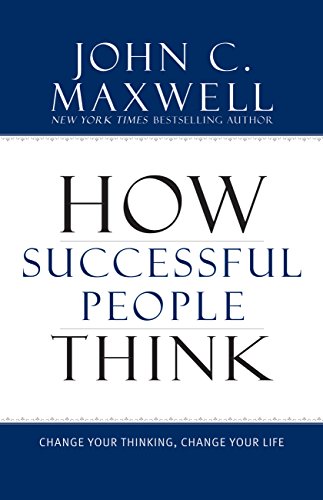
How Successful People Think
Individuals who attain significant levels of success in their lives possess a distinct mindset compared to the average person. According to author John Maxwell, who has dedicated four decades to studying these remarkable individuals, their unique thought patterns are the primary driver behind their extraordinary accomplishments.
Authored by John C. Maxwell in 2009, spanning 160 pages.
Review and Summary of “How Successful People Think”
Introduction:
This review is divided into two main sections, closely mirroring the structure found in John C. Maxwell’s book “How Successful People Think.”
The initial segment is dedicated to establishing the foundational principles that serve as a stepping stone for your growth by nurturing improved thinking habits. To summarize these briefly:
- Identifying the reasons that prompt a change in your thinking patterns.
- Embracing the overarching approach to evolving into a more proficient thinker.
- Outlining the optimal process for fostering a mindset oriented towards holistic thinking.
In the subsequent part of this review, you’ll discover an in-depth examination of various “thinking strategies” that, when mastered, have empowered numerous individuals to craft remarkable lives for themselves and exert a profound, enduring influence on the world. This examination aligns with the various chapters of John C. Maxwell’s book “How Successful People Think” and unfolds as follows:
- “Big-picture” thinking (Chapter 1).
- Focused thinking (Chapter 2).
- Creative thinking (chapter 3).
- Realistic thinking (Chapter 4).
- Strategic thinking (chapter 5).
- “Exploring possibilty” thinking (Chapter 6).
- Reflective thinking (Chapter 7).
- Popular thinking (chapter 8).
- Shared thinking (Chapter 9).
- Unselfish thinking (Chapter 10).
- “Bottom-line” thinking (Chapter 11).
Part 1: The Fundamentals of New, More Effective Thinking
A. The reasons why you might need to change the way you think.
When you become a skilled thinker by understanding the ideas in this book, you’ll enjoy many great benefits in your life:
Climbing the career ladder or starting your own business becomes easier. As John C. Maxwell puts it, knowing “how to” gets you a job, while understanding “why to” makes you your own boss.
You’ll gain more freedom and independence. No one can manipulate you easily when you think critically. History shows how leaders can control people who don’t think for themselves, like Adolf Hitler did.
All kinds of wealth, not just money, come from your thoughts. Napoleon Hill (Think and grow rich summary), who studied successful people for years, said that more wealth comes from minds than from mines. His advice is worth considering.
Improving your thinking isn’t easy, but it’s worth it. Both John C. Maxwell and Albert Einstein agree that thinking takes effort. Even though it’s tough, the rewards are huge, and it can change your life and the world, just like Einstein’s work did.
“A person who knows how will always have a job, but the person who knows why will always be his boss.” John C. Maxwell, How Successful People Think
B. The general approach to becoming a “better thinker”.
Improving how you think might seem hard, but it’s really important to make it a regular habit. Becoming a better thinker takes time and practice, not just doing it once. It’s like a journey where you keep getting better.
Later, we’ll talk about eleven different ways to think better. But for now, let’s look at six things you can do and attitudes you can have to make your thinking stronger and more thoughtful.
- Learn New Things: Explore new ideas from books, videos, seminars, and more. If something interests you, remember it for later.
- Be with Smart People: Spend time with people who make you smarter. Surround yourself with those who help you grow and think better.
- Find Quiet Times: Set aside time for thinking without distractions. Make it a regular habit, like successful people such as Dan Cathy.
- Take Action: Don’t just think – act on your ideas quickly before they fade away.
- Stay Positive: Don’t wait for the perfect mood to think or act. Start now and let positive feelings fuel your thinking.
- Make Habits: Turn these actions into habits. Continuously improving your thinking will lead to a flow of great ideas and a better life overall.
Ultimately, these practices must solidify into habits. Frequently, a lone exceptional thought falls short in fashioning your ideal life. Strive instead for a continuous influx of superior thoughts and ideas through perpetual enhancement of your thinking methodology. In doing so, the need to fend off imitation or rivalry becomes inconsequential.
C. The ideal process for developing big-picture thinking.
If you follow the six suggestions mentioned earlier and turn them into habits, your way of thinking will get a lot better over time. But it’s also really important to learn the different steps for coming up with good thoughts, picking the best ones, making them better, helping them grow, and turning them into real actions. This is important so that your thoughts can be useful to the world, not just nice-sounding ideas. John C. Maxwell has a plan with five steps for doing this.
- First, think about your thoughts and write them down. Find a place that works well for you to think and come up with ideas. The best place is different for everyone. Some people have great ideas in the shower, others while walking in a park or a forest, some in their car, or even while sitting in a hot tub. Figure out the place that makes your thinking better, go there often, and write down your thoughts and ideas so you don’t forget them. It’s also a good idea to keep a notepad and pen by your bed to write down any good ideas you get before falling asleep or when you wake up. And carrying a notepad and pen with you all the time can help you catch your best thoughts (you can also use your cellphone’s “notes” for this).
- Next, work on shaping your thoughts. Spend regular time making your ideas better. It’s rare for your thoughts and ideas to be perfect and ready to use right away. Writing down your ideas and thinking about them helps make them clearer and helps you figure out if they’re really good. So, don’t be afraid to think about whether your thoughts and ideas make sense.
- After that, stretch your thoughts. Writing down and shaping your thoughts is a good beginning. But if you want to turn them into really great ideas, there are a few more steps you need to do. The next step is to make your ideas bigger. One of the best ways to do this is to share your ideas with other people, like your team or a group you’re part of. Ask them to talk about your ideas and give their opinions so your ideas can become even better. As John C. Maxwell says, “You can make a lot more progress with a team than you can on your own.”
“Ideas have a short lifespan. You must act accordingly before the expiration date.” John C. Maxwell, How Successful People Think
- Share your thoughts. “An idea becomes really powerful when it’s put into action.” John C. Maxwell explains this by talking about Albert Einstein. Einstein’s theory of relativity was just a smart idea when he first shared it. But when scientists used his idea to make nuclear reactors (and unfortunately, atomic bombs), it changed the world. So, make sure you convince the right people that your idea is good: (a) believe in your idea yourself first, because others will only believe it if you really do; (b) convince the important people who can support your idea; (c) get the people who might use your idea excited about it.
- Put your thoughts into action. “Thinking without doing doesn’t really help” (John C. Maxwell). Your thoughts only matter if you can actually do something with them in the real world. So, after you’ve come up with, shaped, expanded, and shared your ideas, remember the most important part: making them real and doing things to benefit everyone.
- No matter your education, how smart you are, your social status, your past, your health, or your money situation – whatever your situation is, you can get better at thinking. You just need to (1) develop the six good habits we talked about, (2) follow the five steps we explained, and then (3) use them with each of the 11 important ways of thinking we’ll talk about later in this review.

Part 2: The 11 Fundamental Types of Thinking
Chapter 1: “Big-Picture” Thinking
The theory
“Big-picture” thinking has two parts: (1) seeing the whole situation clearly by getting a wide view, and (2) letting yourself dream big and have ambitious ideas.
As John C. Maxwell explains, this way of thinking is like making a picture bigger to see more. It helps you see better and achieve more.
People who are good at this type of thinking do four main things: (1) They keep learning new things all the time. (2) They ask questions and listen carefully, especially to people who can teach them. (3) They try to see things from other people’s point of view. (4) They do a lot and accomplish more than people who only think about small things.
Here are six reasons why learning to think in a big way is really useful:
-
It helps if you want to be a leader in your field. Leaders are usually big-picture thinkers.
-
It keeps you focused on your goal. You need to see how small things connect to the big goal.
-
It helps you understand others. Seeing from their perspective is important.
-
It’s good for teamwork. When your team sees the big picture, they work better together.
-
It lets you step back from everyday things and focus on what’s really important.
-
It helps you discover new things and be creative by looking at things differently.
The practice
There are a couple of ways to see things from a wider point of view. Here are two things you can do to help with this:
Learn from Every Experience: Don’t just stay comfortable and satisfied when things go well. When you succeed, figure out why it worked so you can do it again in different situations. And when things don’t go well, it’s not all bad if you learn something positive from them. Even if something fails, you can get better by understanding what went wrong.
Try Different Things: When you do many different things, you learn more and get better. So, don’t do the same thing all the time. Trying new things helps you grow.
So, learning from your experiences (good and not-so-good) and trying new things are two important ways to think bigger and see the whole picture. Remember what David Schwartz said in his book “The Magic of Thinking Big“: Success isn’t just about measurements like height, weight, or degrees. It’s about how big you can think.
Chapter 2: Focused Thinking
The theory
Thinking with focus means you can pay attention to important things without getting distracted. This way of thinking has four good things about it: (1) it gives you energy to reach your goals, (2) it helps you turn your ideas into great ideas by spending time on them, (3) it makes things clearer, so you can really reach your goal, (4) it helps you do better than before.
The practice
How to Use Focused Thinking:
You might be wondering what things you should focus on. You’re right, you can’t be great at everything. So, choose carefully. Pick things you want to get better at and think about. These ideas might help you choose:
Pick What’s Most Important: Choose things that are important to you, things you’re good at, or things that can give you good results. You can also use the 80/20 rule: focus on the 20% of things that get you 80% of the results.
Find What You’re Naturally Good At: If you’re not sure what you’re good at, you can take personality tests. Some are really helpful, like the “Strengths Finder 2.0.”
Have Big Dreams: Great ideas need big dreams. If you’re not sure about your dreams, spend time thinking about them. Once you know your dream, work on making it real.
Remember these tips for focused thinking: (1) get rid of distractions, (2) set time for thinking about one thing, (3) don’t do many things at once. Studies say multitasking makes you 40% less productive.
How Successful People Think Chapter 3: Creative Thinking
The theory
Annette Moser-Wellman, who wrote “The Five Faces of Genius,” talked about how important creativity is. She said that your most important thing in your work and for your company is your creativity. Your ideas really matter.
Creative thinking is not the same as coming up with brand new things. It can be as simple as putting together ideas that already exist in a new way. You don’t have to come up with something completely new each time.
People who are creative share some things in common:
They like ideas.
They like to think of different options and use their imagination. Albert Einstein said that imagination is even more important than knowledge.
They’re okay with not knowing everything and with things being unclear.
They like to do things in a unique way, even if it’s a bit different from what others do.
They’re good at seeing connections between things that seem separate at first.
They’re not afraid of failing. John C. Maxwell said that being creative means being okay with looking silly sometimes.
Here are five good reasons to become more creative:
- It makes everything you do more valuable, no matter what field you’re in.
- The more you use your creativity, the more creative you become. It keeps growing.
- People like being around creative people and hearing their ideas.
- Being creative helps you learn more. If you’re always looking for new ideas, you keep learning.
- Creative thinking challenges how things usually are and can make the world better.
So, being creative is important and can make a big difference in many areas of life.
The practice
Here are two things you can do to become more creative:
Get Rid of Creativity Killers: Some actions and thoughts stop your creativity from growing. Negative sentences people tell themselves or hear from others can block creativity. Examples include: “You’re not creative,” “Follow the rules,” “Don’t ask questions,” and more. These thoughts limit creativity. Just writing them is hard for me, as I’m creative and find them wrong and negative.
Ask the Right Questions: Sir Anthony Jay once said, “People who aren’t creative can find wrong answers, but creative people find wrong questions.” Wrong questions stop creative ideas and keep us on the same old paths. Instead, ask the right questions. For instance: “Why must it be done this way?” or “What’s the real reason for this problem?” or “Who has a different view on this?”
Doing these two things can help you become more creative.
Chapter 4: Realistic Thinking
The theory
“Reality is the difference between what we would like and what is.” (John C. Maxwell)
Realistic thinking can bring you many advantages:
- Minimizing Risk: It helps you prepare for worst-case scenarios and come up with plans to handle them. This reduces the chances of setbacks.
- Facing Reality: It makes you confront the real situation and create practical action plans to achieve your goal.
- Catalyst for Change: Realistic thinking can inspire changes in your approach when you see what’s really happening, such as rethinking strategies to improve product sales.
- Security and Confidence: Having backup plans in case things go wrong gives you confidence and peace of mind about the future.
- Gaining Employee Confidence: Realistic thinking enhances your employees’ confidence in your leadership as you demonstrate awareness of potential risks.
- Building on a Solid Foundation: It’s about basing decisions on reality rather than just desires or wishes.
- Stability in Uncertainty: Realistic thinking provides a safety net when things don’t go as planned.
- Achieving Goals Easier: If you understand the reality of your dream and what it takes to achieve it, you’re more likely to succeed.
The practice
To practice realistic thinking, consider these tips:
Face the Truth: Develop the courage to confront reality. The truth might not always be pleasant, but it’s a powerful asset.
Weigh Pros and Cons: Analyze situations and solutions objectively. Look at all angles, not just what’s favorable to you. However, avoid oversimplification and consider the importance of each factor.
Realistic thinking is a valuable skill that can lead to better decisions and outcomes.
People who read “How Successful People Think” also love:
Never split the difference summary
Exactly what to say – The magic words for influence and impact

How Successful People Think Chapter 5: Strategic Thinking
The theory
Strategic thinking isn’t limited to military or business contexts; it applies to every aspect of life. Many people either don’t plan at all or only create simple to-do lists for the day, missing out on deeper planning.
To truly take charge of your life, you need more comprehensive planning. John Maxwell suggests setting aside half a day at the beginning of each month to plan the next 40 days (leaving 10 extra days for the following month). This detailed planning involves knowing your activities day by day and sometimes even hour by hour.
Strategic thinking has numerous benefits:
- Simplifies Complexity: It breaks down complex goals into manageable tasks, making seemingly impossible objectives achievable and less overwhelming.
- Asks the Right Questions: It guides you to ask vital questions like what to prioritize, who’s responsible, financial planning, and how to improve efficiency.
- Finds Appropriate Solutions: Strategic thinking acknowledges that diverse problems require tailored solutions.
- Prepares for Uncertainty: By thinking strategically, you’re better prepared to face uncertainties and increase your odds of success.
- Reduces Errors and Aligns Goals: It minimizes mistakes by aligning actions with objectives, reducing detours.
- Influence and Leadership: Strategic thinkers can lead effectively, as others are more likely to follow when they sense a clear direction.
Embracing strategic thinking helps you plan, boost productivity, and ultimately reach your goals.
“Instead of trying to be great, be a part of something greater than yourself.” John C. Maxwell, How Successful People Think
The practice
Here are two steps to enhance your strategic thinking:
- Divide and Conquer Approach: Instead of tackling a significant challenge or goal head-on, break it into smaller, manageable sub-goals. Continue breaking down these sub-goals into tasks that can be added to your daily, weekly, and monthly to-do lists. Remember the words of Miguel de Cervantes: “Being prepared is winning half the battle.”
- Start with “Why” Before “How”: Prioritize asking “why” before jumping into “how.” Determine the true significance of the problem or goal. Consider the consequences of not addressing it and the potential impact of solving or achieving it. These questions help you allocate the right amount of attention and resources.
Chapter 6: “Exploring Possibility” Thinking
The theory
People who engage in this kind of thinking are capable of achieving feats that might have seemed incredibly difficult or even impossible to accomplish. There are numerous reasons to explore possibilities in this manner:
- Expanded Opportunities: Possibility thinking broadens your actual options and creates new avenues for you. John C. Maxwell emphasizes that if you genuinely believe you can achieve a challenging task and succeed, many doors will open for you. For instance, George Lucas, the director of Star Wars, achieved groundbreaking special effects despite skepticism, leading to more opportunities in his field.
- Attracting Others: This approach draws individuals who don’t limit themselves to the present constraints or commonly accepted boundaries of what’s achievable. Those who engage in possibility thinking inspire and captivate those around them.
- Dreaming Big: Possibility thinking enables you to foster ambitious dreams, which can potentially become reality.
- Rising Above Mediocrity: It positions you to transcend mediocrity and excel.
- Boosting Energy: Possibility thinking injects you with energy and enthusiasm.
- Fostering Perseverance: Belief in your capacity to achieve significant goals or dreams fuels your persistence. Conversely, attempting something without genuine confidence in success can be less fruitful because you might mentally quit even before starting.
The practice
Here are two pieces of advice to help you practice possibility thinking:
- Challenge the Norms: The first step is to challenge the existing norms. As the author explains, growth requires change, and change demands questioning the status quo. If you desire greater possibilities, you can’t be content with your current situation. When you adopt the mindset of possibility thinking, you’ll encounter individuals who urge you to abandon your dreams and settle for the way things are. However, those who accomplish remarkable feats in life are those who refuse to accept the ordinary.
- Draw Inspiration from Achievers: Seek inspiration from individuals who have achieved remarkable things. Identify those whose accomplishments resonate with you and whom you admire. Delve into their stories by reading their biographies. This practice will start to shape your thinking in the vein so eloquently described by George Bernard Shaw: “Some people see things as they are and ask, ‘why?’. But I dream of things that never were and ask, ‘why not?'”
How Successful People Think Chapter 7: Reflective Thinking
The theory
Even though life is busy and fast-paced, taking time to think about your past experiences is important. This helps you learn from both good and bad situations. There are five good reasons to do this:
- See Things Clearly: Reflective thinking helps you look at things from a distance, making it easier to understand both good and bad experiences.
- Stay Balanced: It helps you not get too carried away by strong emotions from past experiences, whether they were good or bad.
- Be More Confident: When you think about problems, you can remember your solutions and use them again if similar situations come up.
- Get the Big Picture: Reflecting lets you see how different ideas and experiences fit together, so you can understand them better.
- Learn from Experiences: Experiences alone don’t always make you better. Reflecting on them helps you learn valuable lessons and gain insight for the future.
The practice
Two actions to practice reflective thinking:
- Look Back at Your Calendar: After some time, take a look at your calendar. See what you’ve done, who you’ve met, and where you’ve been. Ask yourself if you used your time well and moved closer to your goals.
- Ask Good Questions: When you’re looking back, ask yourself good questions. These questions can help you learn and grow. For example, ask: “What did I learn today?”, “Did I help others?”, or “Did I show love to my loved ones?” Asking these questions can add value to your reflections.

Chapter 8: Popular Thinking
The theory
Sometimes, the ideas that most people believe can be hard to ignore. As John Maynard Keynes said, “It’s not easy to come up with new ideas, but it’s even harder to let go of old ones.” These common beliefs can limit you in different ways. But don’t be afraid to question them. Even if it makes you unpopular, doing so has many benefits:
- Thinking for Yourself: It’s important to learn to think on your own, even though it’s not always simple. Kevin Myers captured it well when he said, “Popular thinking often doesn’t require you to think at all.”
- Avoiding Mistaken Beliefs: Throughout history, popular thinking has been wrong about things like the Earth being flat or not needing to clean surgical tools. Today’s common beliefs might seem silly in the future, so it’s wise to think for yourself.
- Adapting to Change: Popular thinking tends to resist change and new ideas. If you can think independently, you’ll be better at adjusting to new situations.
- Achieving Big Goals: Common beliefs lead to average results. If you want to do something great, you’ll need to break free from popular thinking.
The practice
To break free from popular thinking, try these two approaches:
- Think Before You Follow: Many people just follow the crowd without thinking. But if you want to succeed, it’s important to think for yourself. Challenging common ideas might make you unpopular, but it’s necessary to step out of the ordinary, as John C. Maxwell suggests.
- Embrace Different Perspectives: If you want to escape popular thinking, spend time with people who are different from you. If you hang out with people from diverse backgrounds, you’ll be able to challenge common beliefs and discover new ways of thinking.
“You are today what your thoughts have brought you. Your will be tomorrow where your thoughts take you.” John C. Maxwell, How Successful People Think
How Successful People Think Chapter 9: Shared Thinking
The theory
Ken Blanchard wisely said, “None of us is as intelligent as all of us together.” This perfectly captures the essence of shared thinking, where people come together to think collectively. This practice is particularly crucial for effective leaders, who understand the strength that comes from shared perspectives.
Here are 6 key benefits of shared thinking:
-
Speed and Efficiency: Collaborative thinking is like taking a shortcut. Learning from someone experienced is faster than trying to learn on your own.
-
Innovation Boost: Collaborative efforts often lead to more innovative outcomes. Combining various ideas can spark groundbreaking solutions.
-
Comprehensive Insights: Shared thinking brings together diverse skills, creating a richer pool of expertise.
-
Synergistic Power: “Two heads are better than one” holds true. Shared thinking isn’t just about combining brains – it creates a synergistic effect where ideas build upon each other.
-
Higher Returns: Collaborative efforts yield better results than individual thinking.
-
Great Ideas Flourish: Shared thinking breeds great ideas. Most big ideas are born from a culmination of good ideas.
The practice
Leaders naturally embrace shared thinking by seeking collaboration. Here are two ways to cultivate shared thinking:
- Value Cooperation: Instead of competing, focus on complementing others’ ideas. Help your team by sharing your insights without overshadowing others.
- Choose the Right Partners: When brainstorming, pick people who truly contribute. Look for those eager to improve ideas, value teamwork, and bring expertise to the table.
Remember, shared thinking isn’t just about individual brilliance; it’s about harnessing the collective genius for exceptional outcomes.
Chapter 10: Unselfish Thinking
The theory
You might find it surprising, but thinking about others before yourself has remarkable benefits in various ways:
- Fulfillment: Unselfish thinking brings a special kind of happiness. As Charles H. Burr said, those who give are often the happiest.
- Making a Difference: It adds value to other people’s lives, making a positive impact.
- Building Virtues: Thinking of others promotes good qualities like gratitude, love, and patience.
- Better Quality of Life: It helps you appreciate life and understand important human values.
- Being Part of Something Bigger: Instead of trying to stand out, you become a part of something greater than yourself.
- Creating a Legacy: Unselfish thinking leaves a lasting mark on the world, a legacy that lives on.
The practice
Here are two simple steps to cultivate unselfish thinking:
- Experience Others’ Needs: Spend time in situations where others need help. Giving your time, energy, or money to help others can develop your unselfish mindset.
- Give Anonymously: If you’re used to seeking recognition for your giving, try giving anonymously. The benefits are unique and more fulfilling.
By embracing unselfish thinking, you not only benefit others but also create a positive cycle of growth and contentment in yourself.
How Successful People Think Chapter 11: “Bottom-line” Thinking
The theory
Many companies believe that making as much money as possible is the main goal. However, truly great companies, those that make the world better, have a deeper mission.
For example, my mission is to help people achieve their dreams and create fulfilling lives. If you also have a vision for a better world, share it with me on the webpage mentioned above, because together we can achieve more.
Focusing on the bottom line has several benefits:
- Clarity: It helps you see if your daily actions align with your bigger goal.
- Measurement: You can track progress and see if you’re achieving your desired results.
- Decision Making: It guides your choices toward the bigger picture, offering better direction.
- Motivation: Staying focused boosts morale and increases chances of success.
- Success: Successful companies have clear leaders who know their bottom line.
The practice
Here are two steps to apply this kind of thinking:
- Define Your Bottom Line: Clearly identify your core purpose and what you truly want to achieve. Keep it simple and focused.
- Plan Strategically: Create a smart plan to achieve your goal. Stick to it unless it’s clearly not working.
By understanding your deeper purpose and planning strategically, you move beyond just making money and create a positive impact that lasts.
Conclusion on “How Successful People Think”:
The book “How Successful People Think” is like a small treasure of wisdom. It’s packed with helpful advice from an experienced author, John C. Maxwell, who really wants to help readers succeed. Even though it’s not a big book, it’s full of valuable ideas. In just under 200 pages, Maxwell talks about different ways of thinking that lead to success.
The book is great because it’s not just words on a page. Maxwell gives practical steps to apply his advice and master the 11 types of thinking that successful people have. If you want to become a better thinker and impress others with your smart ideas, this book is a good tool.
But, there are a few things to keep in mind. The book might take longer to read than you expect because it’s packed with important stuff. You need to read it carefully, maybe more than once, to really get the most out of it. Also, there’s some repeated information, which can be a bit annoying. And while the book covers a lot, it’s not a magic fix for everything. Human thinking is complex, and the book could have gone even deeper to explain some things better.
Overall, despite these small issues, it’s one of the best books I’ve read. I read a lot of self-improvement books, and I think this is worth recommending. If you want to be a better leader, improve your business skills, or just become a better person, give it a read. And if you’re interested in learning about other aspects of life like health, money, relationships, and spirituality, check out my blog “Secrets of Success” for more information.
People who read “How Successful People Think” also love:
Never split the difference summary
Exactly what to say – The magic words for influence and impact